
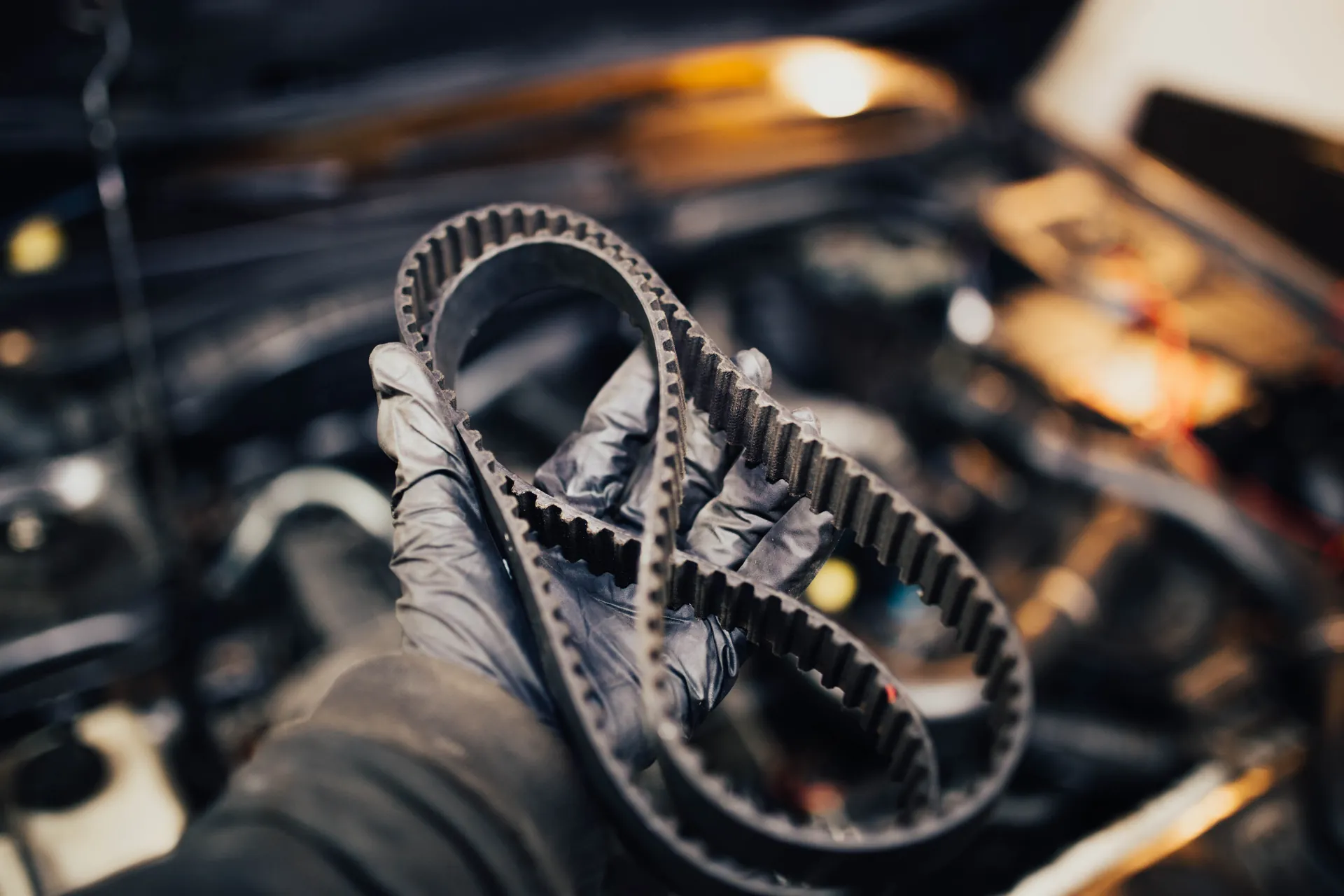
Timing belt replacement in Riga, before it's too late.
Timing belt replacement in Riga to the manufacturer's requirements. We replace the belt, tensioners and pulleys, check the engine timing and protect your engine from an expensive repair.
In brief
Timing belt replacement is planned maintenance in which the belt that keeps the engine's crankshaft and camshaft in sync is replaced, along with the tensioners and pulleys. It is usually done every 60,000-120,000 km or 4-6 years. GT Garage does this at its car service in Riga, Teika, Krustabaznīcas iela 12C. The consultation is free, we agree the price before work starts, and there is a warranty on the work.
Important
A worn timing belt can snap at any moment, without warning. The engine can then be seriously damaged, and the repair will cost far more than a timely replacement.
When should the timing belt be replaced?
The exact interval for your engine is set by the manufacturer. These are the most common reasons for replacement.
| Situation | What to do |
|---|---|
| 60,000-120,000 km driven or 4-6 years passed | Replace as the manufacturer recommends |
| Replacement history unknown after buying the car | Replace as a precaution |
| Cracks, wear or damage visible on the belt | Replace as soon as possible |
| Oil or coolant leaking near the belt | Fix the leak and check the belt |
| After engine or cylinder head repair | Fit a new belt |
The interval is a guide. Your car manufacturer's instructions always take priority.
Signs your timing belt is worn
If you notice any of these, book a check:
- Squealing or unusual noise from the engine
- Visible cracks or wear on the belt
- Oil or fluid leaking near the belt
- The belt slips or jumps a tooth
- A loose belt or damaged tensioners
- The engine runs erratically
- You don't know when the belt was last replaced
How timing belt replacement works
The work is done by experienced mechanics following the manufacturer's technical requirements.
Check before work
We check the engine, the belt and the drive mechanism before we take anything apart.
Removal
We remove the old belt, tensioners, pulleys, and the water pump if it is due for replacement.
Fitting new parts
We fit a new belt, tensioners and pulleys to the engine specification.
Adjustment and check
We set the tension, check the timing and do a test start.
If the check reveals further damage, the mechanic calls you first and agrees the price.
The life cycle of a timing belt: from new to replacement
A belt wears gradually, but it can snap suddenly. Here is how its condition changes over time.
- 0 km
New belt and pulleys
A new belt, tensioners and pulleys fitted, the tension set and the timing checked.
- Every day
Wear you can't see
The belt wears with mileage and ages over the years, even if the car is driven little.
- 60,000-120,000 km
Time to replace
Usually after 60,000-120,000 km or 4-6 years. The exact interval is set by the manufacturer.
- Overdue
Risk of snapping
A worn belt can snap without warning, and then the engine faces an expensive repair.
Timing belt replacement FAQ
Didn't find an answer? Call or message us and a mechanic will reply.
Why should the timing belt be replaced on time?
So it doesn't snap and damage the engine. The timing belt keeps the crankshaft and camshaft in sync, and without it the engine cannot run properly.
How can I tell if my timing belt is worn?
Signs can include squealing or unusual noises, cracks or wear on the belt, slipping and erratic engine running. Sometimes there are no signs at all, which is why it's important to stick to the interval.
How much does timing belt replacement cost?
The mechanic agrees the price with you before work starts, as it depends on the car model, the engine and the parts to be replaced. The consultation is free, and we start work only with your approval.
How often should the timing belt be replaced?
Usually every 60,000-120,000 km or 4-6 years, but the manufacturer's instructions for your engine take priority. If you don't know the replacement history, it's better to replace it as a precaution.
Should the pulleys be replaced along with the timing belt?
Usually, yes. The tensioners and pulleys are replaced together with the belt, and on some engines the water pump too. The mechanic will tell you what's required for your car and agree it with you.
Do all cars have a timing belt?
No. Many engines have a timing belt, but some have a timing chain, which needs different maintenance. Give us a call and we'll find out what your car has.
Completed work and tips
Tips for car owners and real jobs from our workshop.
 Tips
How often should a timing belt be replaced, and what happens if it snaps
 Completed work
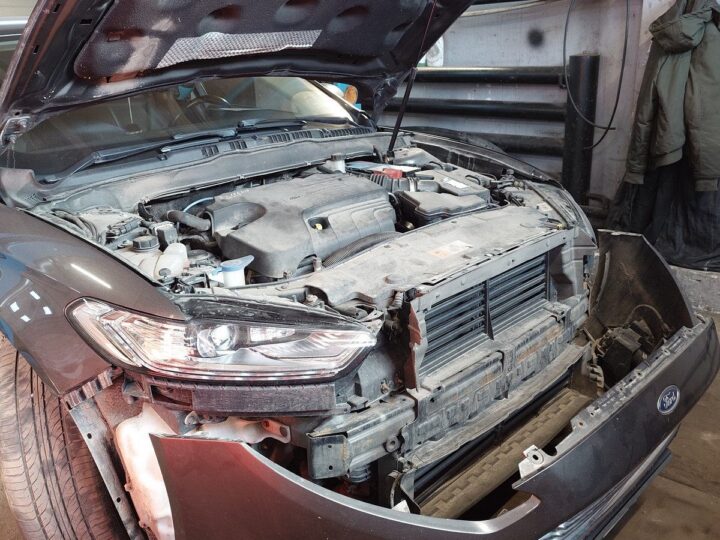
Ford Mondeo 2.0 TDCi: Comprehensive Suspension and Electrical Repair
 Tips
Signs of brake problems: when to check your brakes and what each sign means
 Completed work
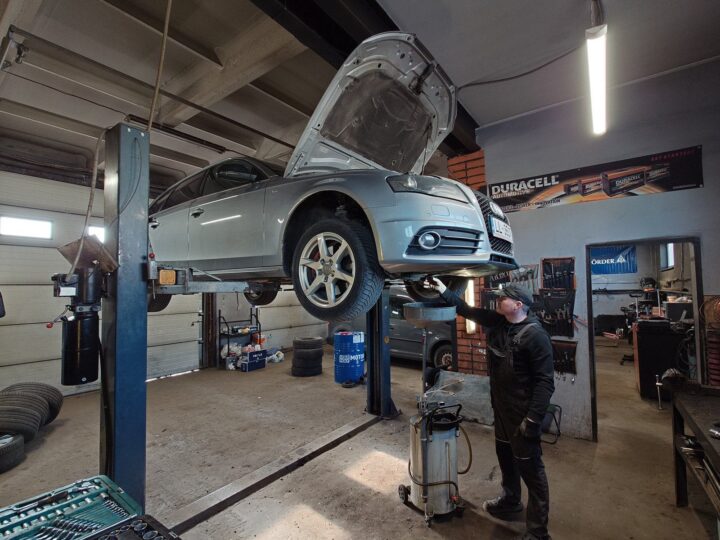
Audi A4 3.0 TDI: Full Service, Auxiliary Belt Replacement and Diagnostics
Call and book
your service.
+371 23 777 337
Rīga, LV-1006
Sat-Sun closedOpen until 18:00
Service bookings
Fill in the form and we'll get in touch to agree a time.