
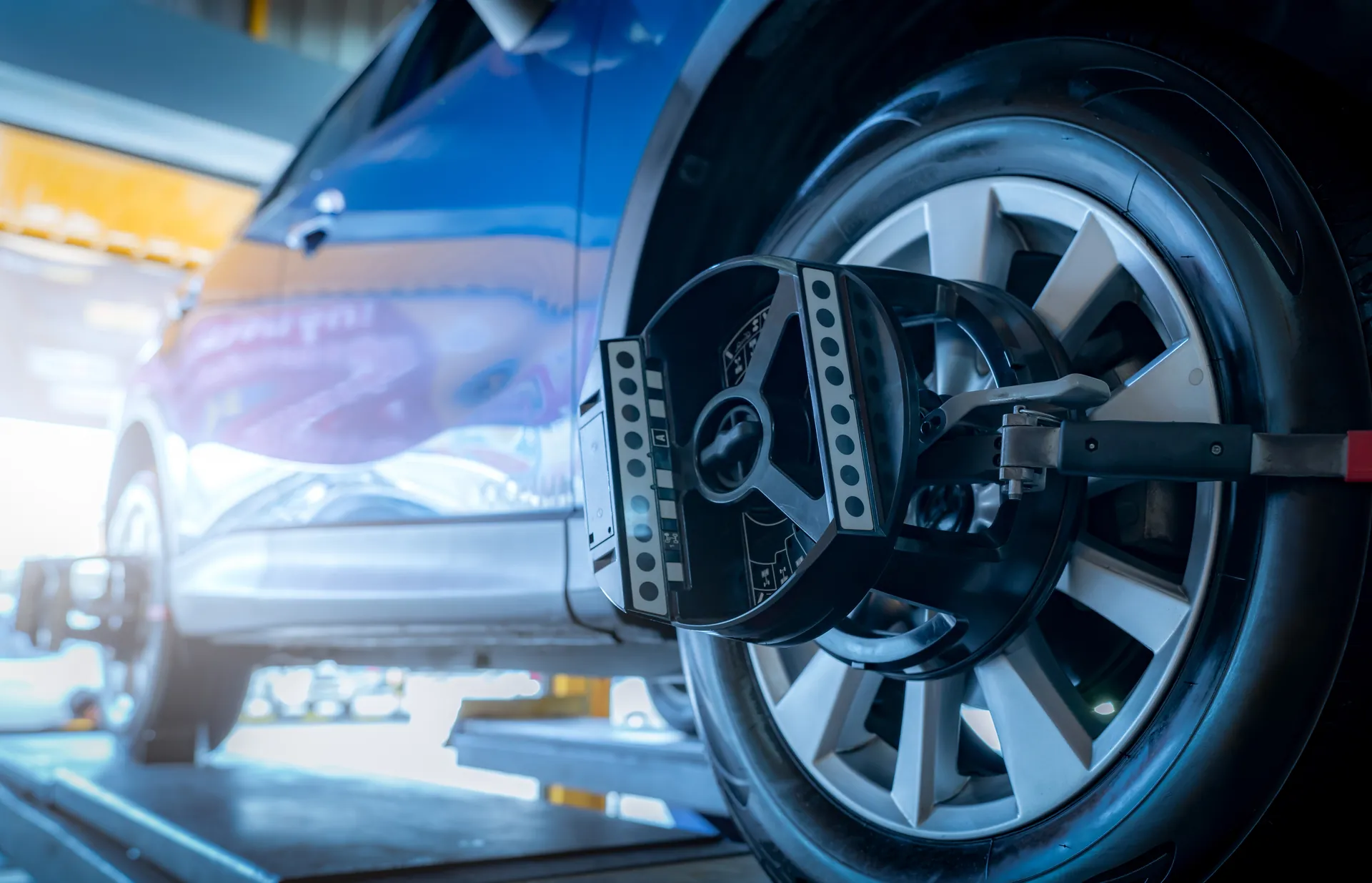
Wheel alignment in Riga, for straight steering.
Wheel alignment in Riga with computerised wheel geometry diagnostics. Afterwards the car doesn't pull to the side, the steering wheel is straight and the tyres wear evenly.
In brief
Wheel alignment means measuring and correcting the wheel geometry angles according to the car manufacturer's data. At GT Garage car service in Riga, Teika, Krustabaznīcas iela 12C, we first check the suspension, steering and tyres, then adjust the wheels with computerised equipment. The consultation is free, we agree the price before work starts, and there is a warranty on the work.
When should you check your wheel geometry?
Check your wheel geometry if you notice any of these signs or your car has recently been repaired.
Steering wheel not straight
When driving straight, the steering wheel is off-centre or the car pulls to the side.
Uneven tyre wear
The tread wears on one side or faster than usual.
After a pothole or kerb
A hard impact or a minor accident can knock the wheel angles out.
After suspension repair
After replacing tie rods, ball joints, shock absorbers or other parts.
After a tyre or seasonal change
So your tyres last longer and driving stays safe.
As a precaution
Once a year or every 15,000-20,000 km.
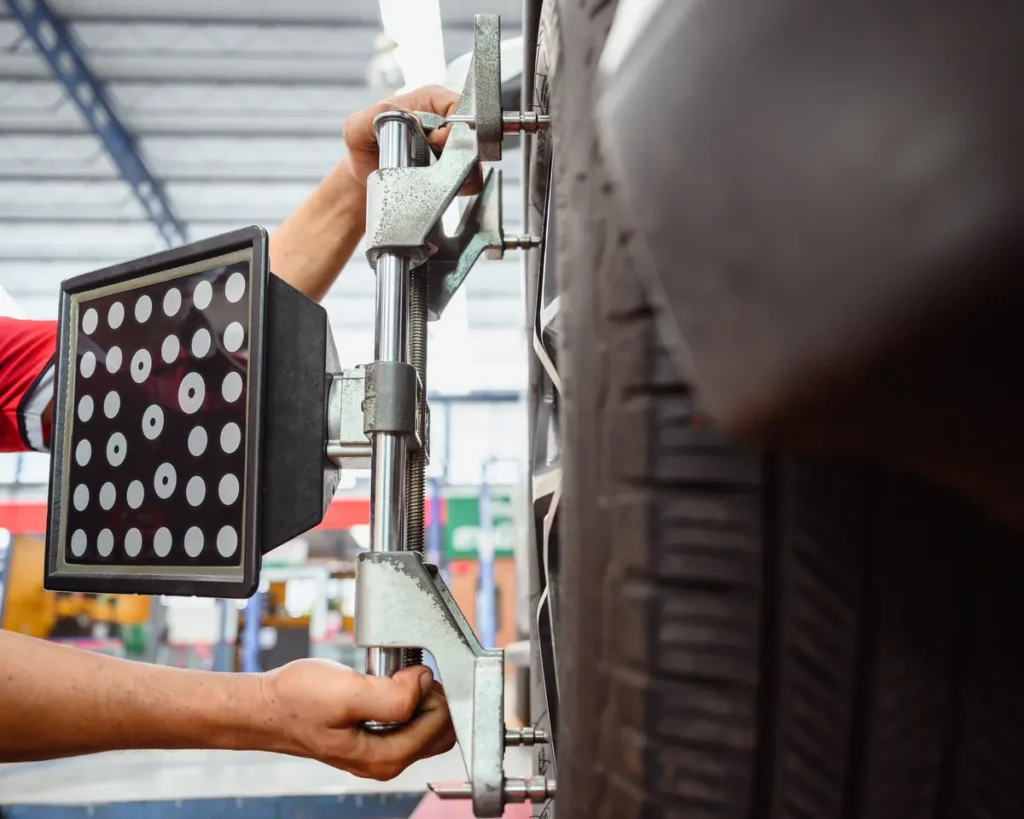
What wheel alignment is and how it's done
Wheel alignment, or wheel geometry adjustment, directly affects your car's handling, tyre wear and safety. If the angles are wrong, the car becomes harder to control, especially on slippery or uneven roads, and the tyres wear faster.
At the GT Garage workshop, the mechanic first assesses the condition of the suspension, steering and tyres. Then computerised diagnostics measure the toe, camber and other angles. If we find worn parts, the mechanic calls you, explains the situation and agrees the repair.
We adjust the wheels according to the car's technical documentation. After the work, we tell you what was done and what to keep an eye on going forward.
Toe, camber and caster: what each angle means
People call all of it alignment, but the measurement shows three different angles, and each affects the car in its own way.
| Angle | What it sets | If it is wrong |
|---|---|---|
| Toe | Whether the front wheels, seen from above, are parallel or turned slightly in or out | The car pulls, the steering wheel is off-centre, and the tread edges wear like saw teeth |
| Camber | The wheel's tilt seen from the front: whether its top leans in or out | One edge of the tyre wears much faster than the other |
| Caster | The tilt of the steering axis seen from the side | The wheel returns poorly after a turn, and the car feels less stable at speed |
Not every angle can be adjusted on every car. The measurement shows which ones can be corrected on yours.
What tyre wear tells you about alignment
Run your palm across the front tyre tread. The wear pattern often points straight to the cause.
| What you see or feel | Most common cause | What to do |
|---|---|---|
| Inner edge worn | Wrong camber or toe, often after an impact | Measure the alignment and check the suspension |
| Outer edge worn | Wrong camber or toe | Measure the alignment |
| Tread ribs sharp like saw teeth | Wrong toe | Adjust the toe |
| Both edges worn, centre fine | Tyre pressure too low | Set the pressure; alignment is usually not the cause |
| Centre of the tread worn | Tyre pressure too high | Set the pressure to the manufacturer's value |
| Patchy wear spots | Worn shock absorbers or unbalanced wheels | Check the suspension and wheel balance |
Alignment won't bring back tread that is already gone, but it stops the uneven wear.
Alignment after winter
Potholes and kerbs hidden under snow and ice are the most common reason a car suddenly starts pulling in spring. If you hit a deep pothole over the winter, have the alignment checked when you change tyres.
What correct alignment gives you
A straight, stable steering wheel
The car doesn't pull to the side and is easier to control, even on slippery roads.
Tyres last longer
The tyres wear evenly, so you don't have to replace them early.
Lower fuel consumption
Correctly aligned wheels create less resistance, so the car uses less fuel.
Wheel alignment in numbers
What we check before wheel alignment
Wheels can only be set accurately if the suspension is in order. Before measuring, the mechanic checks:
- Pressure in all tyres against the manufacturer's data
- That tyres on the same axle are the same size and similarly worn
- Play in the tie rods, tie rod ends and ball joints
- Control arm bushings for cracks or wear
- Shock absorbers and springs
Wheel alignment FAQ
Didn't find an answer? Call or message us and a mechanic will reply.
How often should wheel alignment be done?
As a precaution, once a year or every 15,000-20,000 km. It's also worth checking the alignment after suspension repair, a tyre change or a hard impact.
How do I know my car needs a wheel alignment?
The main signs are an off-centre steering wheel when driving straight, the car pulling to the side and uneven tyre wear. Also check the alignment after a hard impact or suspension repair.
Why is wheel alignment needed?
Correct alignment gives good handling, even tyre wear and safety on the road. If the angles are wrong, the tyres wear faster and the car pulls to the side.
Does wheel alignment fix uneven tyre wear?
Yes, if the wear is caused by incorrect wheel angles. After alignment the tyres wear evenly, but tread that has already worn away can't be restored.
How long does a wheel alignment take?
It depends on the car and the condition of the suspension. Ask the mechanic when you book, and they'll tell you what to expect for your car.
Does the car need special care after a wheel alignment?
No, no special care is needed. Keep an eye on tyre pressure and wear, and have the alignment checked again after a hard impact or suspension repair.
Is toe the same as wheel alignment?
Toe is one part of it. Strictly speaking, toe is the wheel angle seen from above, while wheel alignment covers all the angles: toe, camber and caster.
Do I need car diagnostics before wheel alignment?
Full diagnostics are not needed, but the suspension has to be checked. If there is play in the tie rods or ball joints, the wheels cannot be set accurately, so the mechanic checks this first and agrees any repair with you before doing it.
Does alignment need adjusting after a tyre change?
Not every time, because changing tyres doesn't change the angles. A seasonal tyre change is still a good moment to check, especially after a winter of potholes or if the tyres are wearing unevenly.
Call and book
your service.
+371 23 777 337
Rīga, LV-1006
Sat-Sun closedOpen until 18:00
Service bookings
Fill in the form and we'll get in touch to agree a time.